
Table of Contents
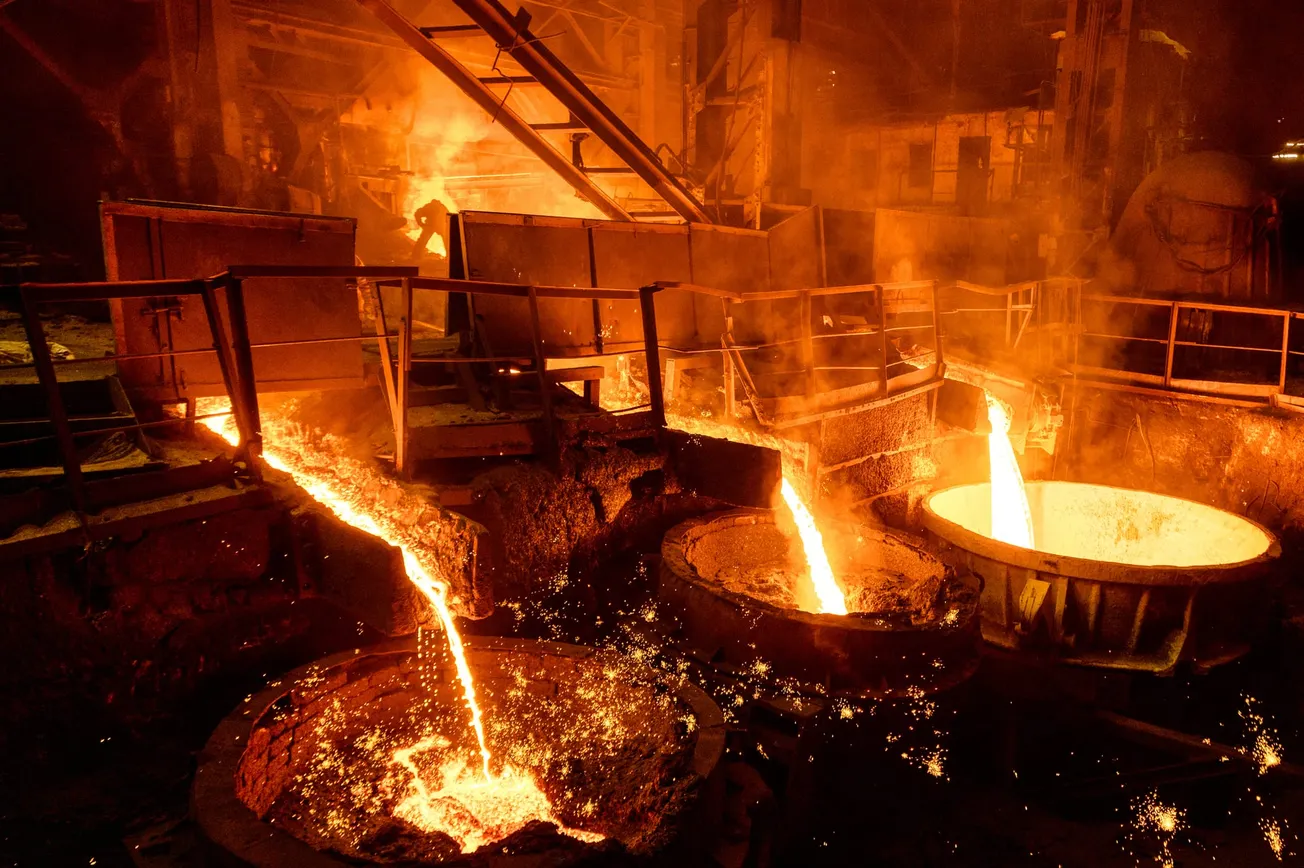
Steel slag, a rock-like waste byproduct of steelmaking, may offer a low-cost way to store solar energy for use after dark or on cloudy days, according to findings published this month by a team at Penn State.
High-temperature thermal energy storage (TES), which involves capturing heat and releasing it on demand, is one proven method for smoothing out solar power's intermittency, but the technology can be expensive to deploy. The Penn State team, led by Michael Enemuo, a graduate student in mining and mineral processing engineering, set out to test whether industrial waste could cut that cost.
The findings, published Sept. 15 in the journal Solar Energy, mark the first phase of a three-part project examining whether steel slag could be repurposed as a TES material, reducing both storage costs and the volume of slag waste that accumulates near steel plants.
"One of the problems with many renewable energy sources, like solar, is that they are intermittent," said Olumide Ogunmodimu, assistant professor of energy and mineral engineering at Penn State and a co-author on the paper. "Solar energy is inherently intermittent and variable because sunlight is not continuously available due to the day-night cycle and changing weather conditions. This means we need to find some way to store the energy captured from the sun for later use."
TES systems function similarly to batteries, storing thermal energy for extended periods before releasing it when needed. In this first phase, the researchers analyzed three types of steel slag to assess their suitability for high-temperature storage: ladle metallurgy furnace slag, rich in magnesium oxides and calcium aluminates; basic oxygen furnace slag, high in calcium oxide and free lime; and electric arc furnace (EAF) slag, which has higher oxide content and a more stable crystalline structure.
"Despite clear advances, many engineered TES systems still face challenges related to material cost, corrosion and long-term degradation under repeated thermal cycling," Enemuo said. "These limitations have motivated increasing interest in low-cost, sensible heat storage media, particularly materials derived from industrial by-products."
Enemuo said the idea grew out of his exposure to the steel industry's waste problem. "There are piles and piles of slags stored near the steel factories, which can be toxic to the environment, so finding a way to repurpose them was a big motivation," he said.
Using industrial waste for energy storage also has implications for a circular economy, according to the researchers. "Right now, it still requires fossil fuels and raw materials to create renewable energy which leaves us in a carbon debt, so we need to look both at the technology and where it comes from," Ogunmodimu said. "If we repurpose waste products into raw materials, the carbon footprint can drop significantly and so will the cost of energy production."
The team used a multi-technique analytical approach — examining thermal stability, morphological structure and degradation — to compare the three slag types. EAF slag emerged as the most promising candidate, showing low mass loss, minimal free lime and a comparatively stable heat-flow response, according to Enemuo.
"Based on the indirect physicochemical and thermal stability indicators evaluated in this work, the preliminary TES suitability ranking in order is electric arc furnace slag, then ladle metallurgy furnace slag followed by basic oxygen furnace slag," Ogunmodimu said. "However, direct measurements of thermal conductivity, specific heat capacity, density and long-term cyclic stability are required before definitive conclusions can be drawn regarding practical TES performance."
The Penn State project is one of several efforts globally to put slag-based heat storage into practice. Researchers in Spain's Basque Country, working under the European Commission–funded Arcelor Mittal REslag project piloted a 1 MWh EAF-slag storage tank that captures waste heat directly from an electric arc furnace to preheat steel scrap, aiming to displace the natural gas typically burned for that step, but not with the goal of solar storage. Separately, at least one patented design from Khalifa University of Science and Technology (Abu Dhabi) has proposed sintering EAF slag powder into compacted module shapes — balls, cylinders, honeycomb structures — for use in concentrated solar power systems at temperatures up to 1100°C.
Other groups have gone a step further and tried to engineer slag's thermal properties rather than simply characterize them. Researchers publishing in the Journal of Cleaner Production found that treating steel slag with sodium carbonate raised its heat storage capacity by more than 25% and its thermal conductivity by over 32%, while a separate team writing in the Journal of Energy Storage developed a molding process meant to address the structural instability that has plagued earlier slag-based storage materials.
The Penn State researchers said the next steps involve validating the phase-one findings and running further simulations before testing material modifications aimed at production-scale use. The paper's other co-author was Arash Dahi Taleghani, a former Penn State petroleum engineering professor now at the University of Texas at Austin.